



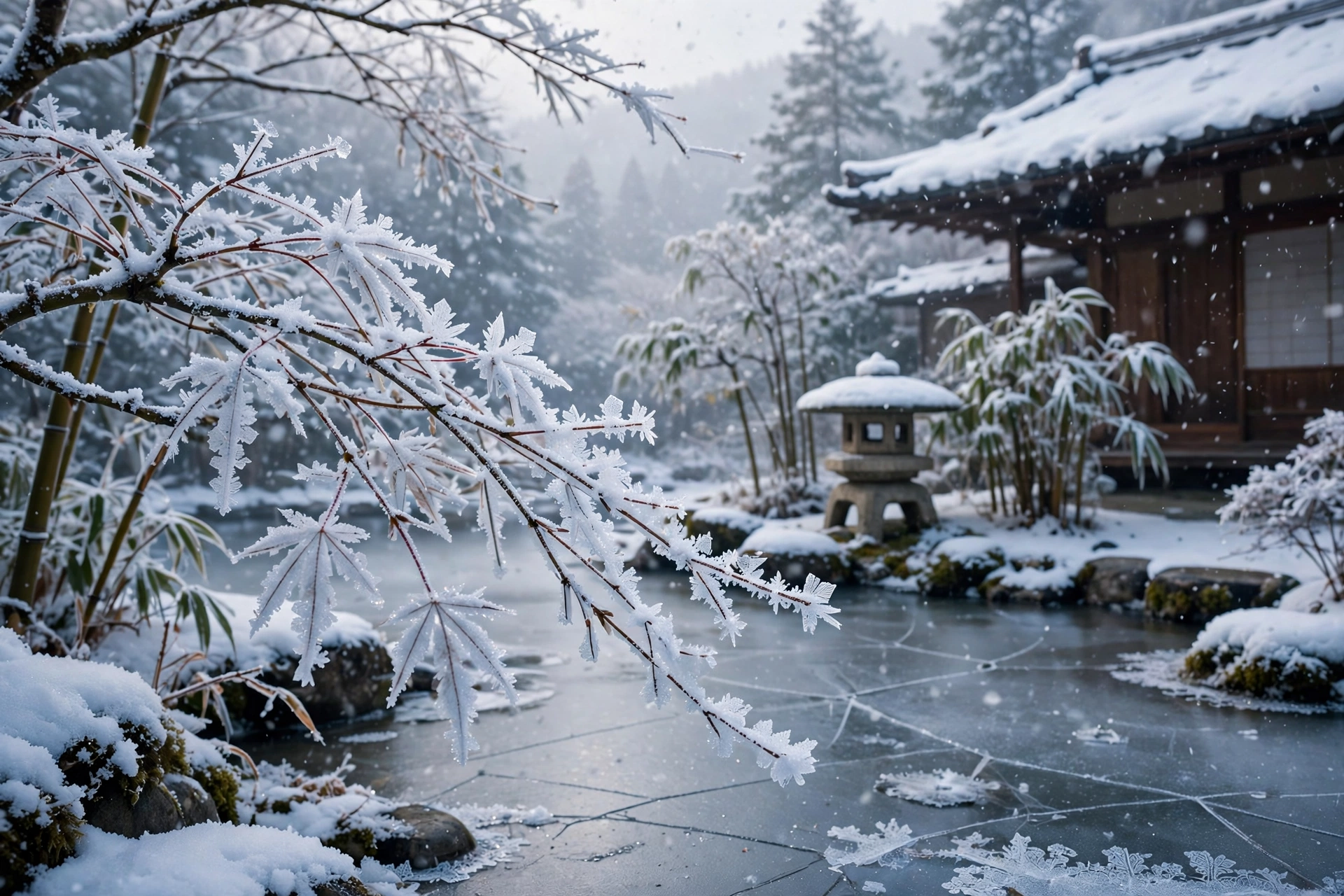
Searching for Japanese names that mean ice? Whether you’re expecting a winter baby, naming a character in your novel, or you’re an anime fan who fell in love with names like Hyōga or Tōshirō, ice-inspired Japanese names carry a special kind of magic. They suggest clarity, calm strength, and quiet beauty — the stillness of a frozen lake, the sparkle of fresh snow.
In Japanese, the idea of “ice” stretches beyond a single word. The kanji 氷 (kōri) means ice itself, while related characters for snow (雪), frost (霜), and winter (冬) open up dozens of luminous naming options. Some are timeless classics your grandmother would recognize; others are rare gems or modern creations with anime flair.
In this guide, you’ll find 32 beautiful Japanese names that mean ice — each with its kanji, true meaning, pronunciation, and honest notes on usage. You’ll also learn how to choose the right one, what mistakes to avoid, and which middle names pair beautifully.
Key Takeaways
- Japanese names that mean ice center on the kanji 氷 (kōri, “ice”), plus related kanji for snow (雪), frost (霜), glacier (氷河), and winter (冬).
- Only a handful of names use the pure “ice” kanji 氷 — most ice-inspired names draw on snow and winter imagery, which is how Japanese parents actually use this theme.
- Yuki, Yukina, Miyuki, and Tōya are the most familiar picks; Hyōga, Hisame, and Fubuki appeal to anime fans and lovers of rare names.
- Always check the kanji: the same reading (like Yuki) can mean “snow” (雪) or “happiness” (幸), so the characters — not the sound — carry the meaning.
- Short on time? Kōri (氷), Rin (凛), and Yuki (雪) are simple, striking choices that work beautifully in both Japanese and English.
The Meaning of Ice in Japanese Culture and Baby Names
Before we explore the list, it helps to understand why ice makes such a powerful namesake in Japan. Ice and snow are woven into Japanese poetry, festivals, and seasonal traditions, and they carry meanings that go far beyond “cold.” Knowing this background will help you choose a name with confidence — and explain it proudly when people ask.
What Ice Symbolizes in Japan
In Japanese aesthetics, ice represents purity, clarity, and resilience. A frozen surface is perfectly clear, so ice imagery often suggests honesty and a transparent heart. At the same time, ice endures the harshest season, which is why winter names can also signal quiet strength and perseverance. Parents who choose these names often want those qualities for their child: calm under pressure, clear in purpose, and graceful under hardship.
Ice, Snow, Frost, and Winter: What’s the Difference in Names?
Strictly speaking, only names built on 氷 (kōri/hyō) literally mean “ice.” But Japanese naming rarely stays that literal. The characters 雪 (yuki, snow), 霜 (shimo, frost), 氷河 (hyōga, glacier), and 冬 (fuyu/tō, winter) all belong to the same frosty family, and parents mix them freely. For this list of Japanese names that mean ice, I’ve included true ice names first, then the snow, frost, and winter names that most parents mean when they search for this theme. Each entry tells you exactly which kanji it uses, so you’ll always know what you’re getting.
32 Japanese Names That Mean Ice
Here is the complete collection — 32 Japanese names that mean ice, organized from familiar favorites to rare finds. Every name includes its kanji, literal meaning, pronunciation, and a practical note on gender, style, and real-world use. Remember that readings can vary by family, so treat the kanji as the true meaning of any name you choose.
Popular Japanese Ice Names
These are the names you’ll actually encounter in Japan — familiar, well-loved, and easy to wear for a lifetime. If you want a name that feels both wintry and wearable, start here. Each one is established, easy to pronounce, and rich with seasonal meaning.
| Name | Kanji | Meaning | Pronunciation | Gender | Note |
|---|---|---|---|---|---|
| Yuki | 雪 | Snow | YOO-kee | Unisex | The classic winter name. Note: 幸 (happiness) is also read Yuki — confirm the 雪 kanji for the snow meaning. |
| Yukina | 雪菜 | Snow; greens | yoo-KEE-nah | Girl | Soft and feminine; the 菜 character adds a fresh, springlike balance to the snow. |
| Yukino | 雪乃 | Of snow | yoo-KEE-noh | Girl | Elegant and literary; 乃 is a classical particle meaning “of.” |
| Miyuki | 深雪 | Deep snow | mee-YOO-kee | Girl | Also commonly written 美幸 (“beautiful happiness”) — verify kanji for the snow meaning. |
| Yukito | 雪人 | Snow person | yoo-KEE-toh | Boy | Gentle and uncommon; usually written with other kanji, so specify 雪人 for the icy meaning. |
| Tōya | 冬夜 | Winter night | TOH-yah | Boy | Crisp and poetic. (Cardcaptor Sakura spells it 桃矢 — choose 冬夜 for the winter meaning.) |
| Rin | 凛 | Cold; dignified | reen | Unisex | Hugely popular; 凛 captures icy dignity and composure without literally meaning ice. |
Rare and Unique Ice Names
If you want something no one else on the playground will have, these rare ice names deliver. They’re built from real words and legitimate name elements — just uncommon as given names, which makes them unforgettable. Expect to spell and explain them, but that’s part of their charm.
| Name | Kanji | Meaning | Pronunciation | Gender | Note |
|---|---|---|---|---|---|
| Hyōga | 氷河 | Glacier | HYOH-gah | Boy (rare unisex) | Famous from Saint Seiya’s Cygnus Hyoga; a bold, dramatic anime-adjacent choice. |
| Hisame | 氷雨 | Hail; sleet | hee-SAH-meh | Unisex | A real weather word meaning “ice rain”; hauntingly beautiful and very rare as a name. |
| Hatsuyuki | 初雪 | First snow | hah-tsoo-YOO-kee | Girl | Poetic; evokes the year’s first snowfall. Rare and delicate. |
| Shimo | 霜 | Frost | SHEE-moh | Unisex | Minimalist and stark; extremely rare as a given name. |
| Kōsetsu | 降雪 | Falling snow | koh-SEH-tsoo | Unisex | Literally “snowfall”; dramatic, literary, and rare. |
| Yukihime | 雪姫 | Snow princess | yoo-kee-HEE-meh | Girl | Regal and storybook-like; rare outside fiction. |
| Shirayuki | 白雪 | White snow | shee-rah-YOO-kee | Girl | “Snow White”; also the heroine of the anime Snow White with the Red Hair. |
Short and Sweet Ice Names
Short names are easy to pronounce in any language — a real advantage for international families. Each of these is just a few syllables long, but carries a full winter’s worth of meaning. They also make excellent middle names or character names.
| Name | Kanji | Meaning | Pronunciation | Gender | Note |
|---|---|---|---|---|---|
| Kōri | 氷 | Ice | KOH-ree | Unisex | The purest ice name on this list — literally the word for ice. Rare and striking. |
| Hyō | 氷 | Ice | hyoh | Boy (rare unisex) | A one-syllable punch; very rare as a standalone given name. |
| Chiyuki | 千雪 | Thousand snows | chee-YOO-kee | Girl | Graceful; suggests endless, boundless snowfall. |
| Fuyuka | 冬香 | Winter fragrance | foo-YOO-kah | Girl | Delicate and evocative — the imagined scent of a winter morning. |
| Yukie | 雪絵 | Snow picture | yoo-KEE-eh | Girl | Artistic; 雪枝 (“snow branch”) is another lovely kanji option. |
Traditional Japanese Ice Names
These names were popular in earlier generations and carry a vintage, dignified charm. They’re perfect if you love old-fashioned Japanese names with deep roots. Many follow the classic pattern of pairing a nature kanji with 子 (ko, child) or 美 (mi, beauty).
| Name | Kanji | Meaning | Pronunciation | Gender | Note |
|---|---|---|---|---|---|
| Fuyuko | 冬子 | Winter child | foo-YOO-koh | Girl | A mid-century classic; warm and nostalgic. |
| Fuyumi | 冬美 | Winter beauty | foo-YOO-mee | Girl | An elegant Showa-era favorite. |
| Setsuko | 雪子 | Snow child | seh-TSOO-koh | Girl | Timeless; here 雪 is read “setsu,” a traditional reading. |
| Tōko | 冬子 | Winter child | TOH-koh | Girl | Same kanji as Fuyuko with a different traditional reading. |
| Fuyuhiko | 冬彦 | Winter boy | foo-yoo-HEE-koh | Boy | Distinguished old-style masculine name; 彦 means “lad.” |
| Yukiyo | 雪代 | Melting snow | yoo-KEE-yoh | Girl | Vintage; refers to snowmelt — the hopeful sign of approaching spring. |
Modern and Anime-Inspired Ice Names
Contemporary parents — and anime fans — are drawn to these fresh, creative ice names. Some come straight from beloved series; others are modern kanji combinations with a cool edge. They work especially well for characters, pen names, and babies of families who love Japanese pop culture.
| Name | Kanji | Meaning | Pronunciation | Gender | Note |
|---|---|---|---|---|---|
| Tōshirō | 冬獅郎 | Winter lion | toh-shee-ROH | Boy | Bleach’s Captain Hitsugaya; a strong, instantly recognizable anime pick. |
| Fubuki | 吹雪 | Blizzard | foo-BOO-kee | Unisex | A real word and a striking name — One Punch Man fans will recognize it. |
| Koyuki | 小雪 | Light snow | koh-YOO-kee | Girl | Also the old calendar word for early winter; borne by actress Koyuki. |
| Yukine | 雪音 | Sound of snow | yoo-KEE-neh | Girl | Made familiar by Symphogear’s Yukine Chris; musical and modern. |
| Yukisa | 雪咲 | Snow blossom | yoo-KEE-sah | Girl | A modern creative pairing — cheerful, with an icy core. |
| Tōma | 冬馬 | Winter horse | TOH-mah | Boy | Energetic and modern; the 冬 kanji gives it the seasonal link. |
| Shizuku | 雫 | Droplet | shee-ZOO-koo | Unisex | A pure water droplet — evokes melting ice and crystal clarity. |
Japanese Ice Names for Boys, Girls, and Everyone
Wondering which of these Japanese names that mean ice suit a boy, a girl, or either? Japanese is relatively flexible — many winter names work across genders — but some lean clearly one way. Here’s a quick guide to help you shortlist by gender, whether you’re naming a baby or a character.
Best Ice Names for Boys
Masculine ice names in Japanese tend to pair winter kanji with strong endings like 也, 人, 彦, or 郎. The result feels crisp and grounded rather than delicate. These are the standouts for boys.
- Hyōga (氷河) — bold and unforgettable, with glacier-sized presence
- Yukito (雪人) — gentle but clearly masculine
- Tōya (冬夜) — poetic “winter night,” modern and cool
- Tōshirō (冬獅郎) — powerful anime heritage from Bleach
- Tōma (冬馬) — energetic and contemporary
- Fuyuhiko (冬彦) — distinguished and traditional
- Hyō (氷) — minimal and fierce; for the truly daring
For more masculine options, browse our full collection of Japanese boy names.
Best Ice Names for Girls
Feminine ice names often combine snow or winter kanji with soft endings like 菜, 乃, 美, or 子. They sound like snowfall looks — delicate but quietly strong. These are the most beautiful choices for girls.
- Yukina (雪菜) — the quintessential snowy girl’s name
- Yukino (雪乃) — elegant and literary
- Miyuki (深雪) — “deep snow,” timeless and graceful
- Hatsuyuki (初雪) — “first snow,” utterly poetic
- Yukihime (雪姫) — “snow princess” for a storybook feel
- Shirayuki (白雪) — luminous “white snow”
- Koyuki (小雪) — sweet “light snow,” easy to say
- Fuyuko (冬子) and Fuyumi (冬美) — vintage classics with warmth
If you love these, you’ll find more in our guide to Japanese girl names.
Unisex Ice Names That Work for Anyone
Some of the coolest ice names refuse to pick a side. These unisex options work beautifully for any gender — and they’re especially handy for writers naming mysterious characters. Japanese parents increasingly choose gender-neutral names, so these feel right on trend.
- Yuki (雪) — the most versatile winter name in Japanese
- Kōri (氷) — literally “ice”; stark and modern
- Rin (凛) — icy dignity in a single syllable
- Hisame (氷雨) — poetic “ice rain” for any gender
- Shimo (霜) — minimalist “frost”
- Fubuki (吹雪) — fierce “blizzard” energy
- Shizuku (雫) — a pure, clear droplet
How to Choose the Perfect Ice-Inspired Japanese Name
With 32 gorgeous options, narrowing it down can feel overwhelming. When choosing from Japanese names that mean ice, let meaning lead — but don’t ignore sound, spelling, and real-life usability. These practical tips will help you land on the one.
- Start with the kanji, not the sound. In Japanese, meaning lives in the characters. Decide whether you want true ice (氷), snow (雪), frost (霜), or winter (冬) first, then find readings you love.
- Say it out loud — in every language your family speaks. A name like Tōshirō is beautiful in Japanese but a mouthful elsewhere; Yuki, Rin, and Koyuki travel effortlessly.
- Watch out for double meanings. Yuki can be snow (雪) or happiness (幸); Miyuki can be “deep snow” (深雪) or “beautiful happiness” (美幸). Lovely either way — just know which one you’re choosing.
- Match the weight to the bearer. A dramatic name like Hyōga or Kōsetsu suits a bold personality or a fantasy character; a baby might wear Yuki or Fuyuka more comfortably day to day.
- Consider the season — or don’t. A December baby named Hatsuyuki (“first snow”) is pure poetry, but winter names work year-round. Don’t feel locked to a birth month.
- Test the nickname. Yukina becomes Yuki-chan; Tōshirō shortens to Tōshi. Make sure you like the casual form as much as the full name.
Beautiful Pairings: Middle Names and Sibling Sets
The right pairing can make an ice name shine even brighter. In Japan, middle names are uncommon — but for international families, or for fictional characters with full names, a well-chosen middle name adds rhythm and depth. Sibling sets with a shared winter theme are another lovely way to tie names together.
Middle Names That Pair Well With Ice Names
When pairing a Japanese ice name with a middle name, aim for contrast in sound and a complementary meaning. A short Japanese first name pairs well with a longer Western middle name, and vice versa. Keep the overall rhythm in mind — say the full name aloud before you commit.
- Yukina Claire — French clarity meets Japanese snow
- Tōya James — crisp and classic in both cultures
- Miyuki Rose — “deep snow” softened by a flower
- Rin Alexander — one sharp syllable balanced by a grand middle
- Hatsuyuki Noelle — “first snow” with Christmas-born charm
- Kōri Jade — ice on ice; cool, modern, and minimal
- Fubuki Rei — double Japanese; “blizzard” plus “lovely” (麗)
Sibling Name Ideas With a Winter Theme
If one child already has a winter name — or you’re naming twins — a matching set feels intentional without being cutesy. Vary the specific imagery (snow, frost, winter night) so each name keeps its own identity.
- Yukito & Yukina — matching snow kanji, distinct endings
- Tōya & Fuyuka — “winter night” and “winter fragrance”
- Rin & Shizuku — icy dignity meets crystal droplet
- Hatsuyuki & Koyuki — “first snow” and “light snow,” a perfect sister pair
- Hyōga & Fubuki — glacier and blizzard; maximum drama for brothers or characters
5 Mistakes to Avoid When Choosing a Japanese Ice Name
Even beautiful names can go wrong with the wrong kanji or a missing detail. Before you finalize any of these Japanese names that mean ice, run through this checklist. A few minutes of care now saves years of corrections later.
- Assuming the reading guarantees the meaning. Yuki written 幸 means “happiness,” not snow. Always confirm the kanji — the characters are the meaning.
- Using a surname as a given name. Himuro (氷室, “ice room”) looks icy and cool, but it’s overwhelmingly a family name in Japan. As a first name it will raise eyebrows.
- Stacking kanji with clashing nuances. Individually lovely characters can combine into odd or unintended meanings. Run your chosen combination past a native speaker if possible.
- Ignoring everyday pronunciation. Shimo, Kōri, and Rin are effortless for English speakers; Hatsuyuki and Tōshirō will need patient repetition. Neither is wrong — just choose with open eyes.
- Borrowing an anime name without knowing its full context. Tōshirō and Hyōga carry strong character associations for anime fans. That’s a plus if you love the reference, but make sure it’s the association you want.
Frequently Asked Questions About Japanese Names That Mean Ice
Still deciding? These are the questions parents, writers, and anime fans ask most about Japanese names that mean ice. Each answer is short, honest, and based on how these names are actually used.
What is the Japanese word for ice, and can it be a name?
The everyday word for ice is 氷, read kōri (or hi in some compounds). Yes, it can be a name: Kōri (氷) is a rare but legitimate unisex given name, and Hyō (氷) uses the same character with its Chinese-derived reading. Both are uncommon, so they feel strikingly modern and minimal.
What Japanese name means “snow”?
Yuki (雪) is the standard and most beloved choice — simple, unisex, and instantly understood. Longer forms like Yukina (雪菜), Yukino (雪乃), and Miyuki (深雪) add elegance while keeping the snow meaning. Just remember to use the 雪 kanji, since Yuki has several other writings.
Are ice-related names more common for boys or girls in Japan?
They lean feminine — snow and winter imagery has long been associated with grace and beauty in girls’ names like Yukiko, Fuyumi, and Miyuki. But masculine ice names absolutely exist: Tōya, Yukito, Tōma, and Fuyuhiko are all established boys’ names. Unisex options like Yuki, Rin, and Kōri are increasingly popular with modern parents.
What is the rarest Japanese name meaning ice?
Hisame (氷雨, “ice rain”) and Shimo (霜, “frost”) are among the rarest — real words, but almost never used as given names. Kōsetsu (降雪, “falling snow”) and Hyō (氷, “ice”) are similarly scarce. Choose one of these if true uniqueness matters more to you than familiarity.
Can non-Japanese families use these names?
Absolutely — Japanese names are widely admired and used internationally. Stick to names that are easy to pronounce in your language (Yuki, Rin, Koyuki, and Mika-style short names travel best), learn the correct kanji and meaning, and use them respectfully. Avoid treating a name as a costume; a little research — like reading this guide — goes a long way.
Which anime characters have ice-related names?
Anime is full of them, which is part of why these names are so loved. Hyōga (Cygnus Hyoga, Saint Seiya), Tōshirō (Hitsugaya, Bleach), Fubuki (One Punch Man), Shirayuki (Snow White with the Red Hair), and Yukino (Yukinoshita, My Teen Romantic Comedy) all draw on ice, snow, or winter kanji. They’re great inspiration — just check the kanji behind your favorite.
How do you pronounce Hyōga and Tōshirō?
Hyōga is pronounced “HYOH-gah” — the ō is a long “oh” sound, held about twice as long as a short o. Tōshirō is “toh-shee-ROH,” with long vowels on both the Tō and the rō. In general, the macron (ō, ū) in romaji signals a long vowel: stretch it, and you’ll sound much closer to a native speaker.
Final Thoughts on Japanese Names That Mean Ice
Whether you choose the crystal clarity of Kōri, the gentle familiarity of Yuki, or the bold drama of Hyōga, Japanese names that mean ice offer something rare: beauty with backbone. They carry the stillness of a frozen lake and the resilience of a winter that always turns to spring — a lovely wish to wrap around a child or a character.
If this list helped you, keep exploring. Browse more Japanese girl names and Japanese boy names, or dive into other names organized by meaning to find the perfect fit. And if you’ve chosen a favorite — or invented a beautiful new combination — share it in the comments. We’d love to hear which frosty name stole your heart.
